
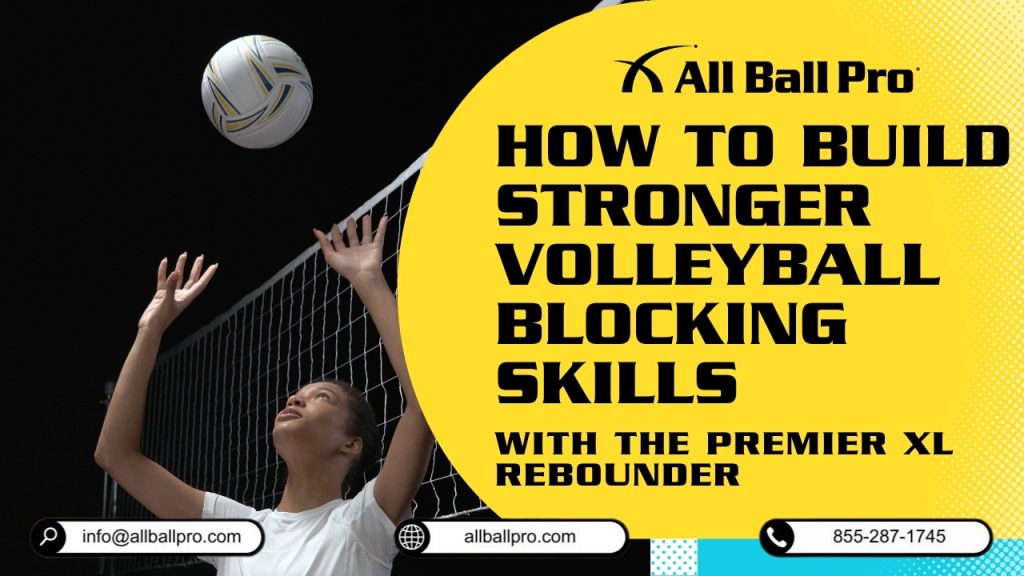
Blocking is one of the most crucial skills in volleyball. A strong block can shut down an opponent’s attack, disrupt their offensive strategy, and shift the momentum of a game. However, mastering blocking requires repetition, proper technique, and reaction training. This is where The Premier XL Rebounder by All Ball Pro can be a valuable tool for improving blocking efficiency. Unlike traditional training methods, a high-quality volleyball rebounder helps athletes develop quick reflexes, precise timing, and stronger hands by simulating real game scenarios.
In this article, we will cover essential drills to build stronger volleyball blocking skills using a Volleyball rebounder, ensuring you get the most out of your training sessions.
1. Hand Position and Strength Training with The Premier XL Rebounder
Before improving reaction time, volleyball players must first master hand positioning and build finger and wrist strength. Strong hands allow blockers to press over the net and prevent the ball from rolling off weak fingers. Using The Premier XL Rebounder, players can develop control and force behind their blocks.
- Wall Press Block Drill – Stand facing the rebounder with arms fully extended above your head. Push against the ball when it rebounds back, holding the position for a few seconds. This strengthens the wrists and fingers.
- Finger Control Drill – Using only your fingertips, tap the ball back onto the rebounder, keeping your hands above your head. This improves fine motor control and prevents weak touches.
- Push-Pull Press Drill – Press the ball forward with an open hand and catch it as it returns. This builds wrist endurance and teaches players to press the ball downward rather than letting it deflect off their hands.
- Single-Handed Block Drill – Alternate hands, focusing on pressing into the ball with control. This is particularly helpful for blocking attacks that come at awkward angles.
- Resistance Band Hand Training – Attach a resistance band to your wrists and block against the ball’s return to improve stability and strength.
- Quick Reaction Hand Drill – Set the rebounder at a slight angle, allowing the ball to return at unpredictable speeds. React and press the ball down into the “court.”
2. Footwork and Timing Development
Effective blocking isn’t just about strong hands—it requires precise footwork and well-timed jumps. A Volleyball rebounder helps players practice their timing and positioning without relying on a setter or attacker.
- Lateral Shuffle Blocking – Stand about 5 feet from the rebounder. Shuffle side-to-side while maintaining a blocking stance, timing jumps with the ball’s return.
- Step-Close Footwork Drill – Start in a ready position. When the ball rebounds, take a quick step with one foot and close with the other, reaching up for a block.
- Quick Jump Reaction Drill – Adjust the rebounder’s angle to return the ball quickly. Jump on reaction and press hands over an imaginary net.
- Two-Step Approach Drill – Mimic a game-like block by stepping into position before jumping and sealing off the imaginary net.
- Jump and Hold Drill – Hold your blocking form at the highest point of your jump to reinforce control and balance.
- Double Block Coordination – Work with a partner, synchronizing jumps and positioning for double-block scenarios.
3. Reading and Reacting to the Ball
A blocker must anticipate an attacker’s movements. The rebounder allows players to react to unpredictable ball angles, helping refine their ability to track and read offensive plays.
- Ball Tracking Drill – Adjust the rebounder to randomize ball returns. Focus on tracking the ball with your eyes before jumping.
- Shadow Block Drill – Have a coach or teammate simulate an attacker’s arm swing while the ball rebounds. Time your jump accordingly.
- Angle Adjustment Drill – Change the rebounder’s angle to simulate different attack angles. This trains adaptability.
- Off-Speed Reaction Drill – Occasionally have a partner lightly tap the ball onto the rebounder, simulating an off-speed shot.
- Reading Hands Drill – Watch a teammate’s arm movements before reacting to the ball’s trajectory off the rebounder.
- Delayed Jump Drill – Force yourself to wait half a second longer before jumping to practice patience and reading cues.
4. Blocking Under Pressure and Game Simulation
Translating drills into game-like situations is crucial for success. Practicing under pressure helps reinforce blocking habits and sharpens decision-making skills.
- Block and Transition Drill – After blocking the ball off the rebounder, quickly transition into defensive positioning.
- Rebound Chaos Drill – Have a partner randomly adjust the rebounder’s angle, forcing the blocker to adjust quickly.
- Speed Block Challenge – Time yourself completing a set number of successful blocks against the rebounder.
- High-Pressure Scenario Drill – Simulate game conditions by having teammates call out attack scenarios before blocking.
- Block and Recover Drill – After blocking, immediately dive or move for a defensive touch, simulating real-game scenarios.
- Team Blocking Drill – Work in pairs, practicing timing and communication for an effective double block.
Blocking is a skill that requires precision, strength, and anticipation. Consistent training with a Volleyball rebounder can significantly enhance a player’s ability to read and react to an attacker while improving hand strength and timing. By integrating these drills into your routine, you can refine your blocking mechanics and become a more formidable presence at the net. The key is repetition and challenging yourself in different blocking scenarios to prepare for real match conditions.
All Ball Pro Rebounders provide an excellent training tool for players looking to enhance their skills through solo or team drills. By using a rebounder, blockers can develop essential techniques that will translate directly into better performance on the court. With dedication and the right training methods, players can build stronger, more effective blocking skills that make a real impact in competitive play.