
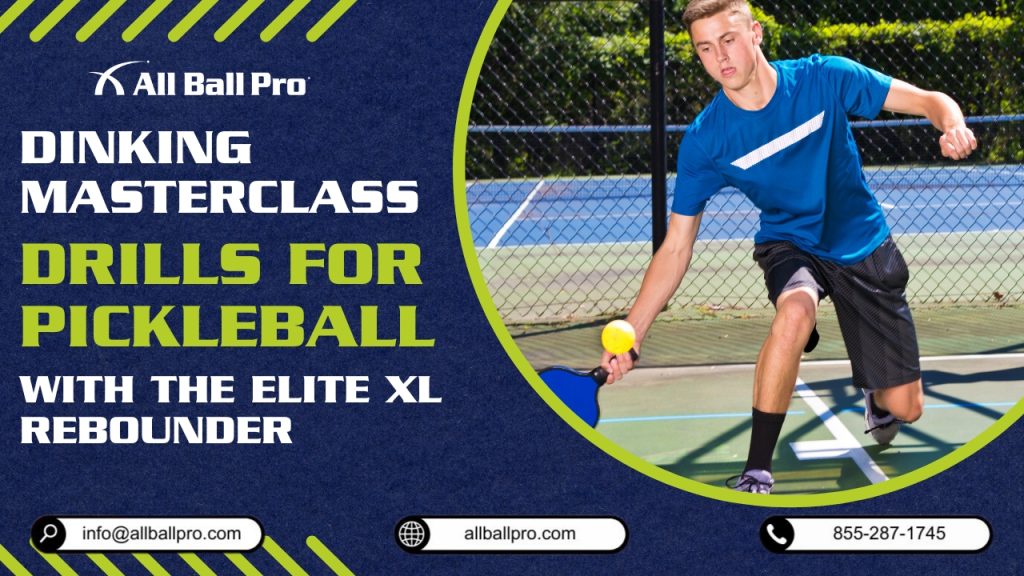
Dinking is an essential skill in pickleball that can often make or break a game. Mastering this technique allows players to control the pace and placement of the ball, creating opportunities to win points. In this article, we’ll explore various dinking drills that can enhance your skills. We’ll incorporate The Elite XL Rebounder by All Ball Pro, a versatile tool that can help players practice their dinking techniques effectively.
Before we jump into the drills, let’s discuss why dinking is so important. Dinking involves soft shots that land in the kitchen, forcing your opponent to respond delicately. This can create openings for you to attack or set up further plays. A good dinker can control the game and keep opponents guessing.
Drill 1: Dink and Rally with The Elite XL Rebounder
This drill focuses on consistent dinking and control. Using The Elite XL Rebounder, you can practice your dinks repeatedly without needing a partner.
Steps
- Set Up the Rebounder: Position the rebounder at the correct angle for a realistic return.
- Start Dinking: Stand about 3 to 5 feet away from the rebounder. Use a two-handed grip for better control.
- Focus on Technique: Aim for a soft touch, making sure the ball lands in the kitchen on both your side and the rebounder’s side.
- Increase Speed: As you get comfortable, gradually increase your speed while maintaining control.
- Challenge Yourself: Try to hit specific targets on the rebounder to improve accuracy.
Drill 2: Cross-Court Dinks
This exercise helps improve your ability to place dinks cross-court, a crucial skill against opponents.
Steps
- Position Yourself: Stand diagonally across from the rebounder, so you’re aiming for the opposite corner.
- Dink Softly: Use a gentle touch to send the ball to the rebounder. Focus on keeping the ball low.
- Adjust Your Angle: Experiment with different angles to see how they affect the ball’s trajectory.
- Increase the Challenge: Once comfortable, try dinking with your non-dominant hand to enhance your versatility.
Drill 3: Dink to Your Partner (or Rebounder)
This drill focuses on practicing dinking back and forth, emphasizing control and precision.
Steps
- Partner Up: If possible, practice with a partner. If you’re alone, continue using the rebounder.
- Start Dinking: Begin with slow, controlled dinks. Aim for consistency in your shots.
- Vary the Speed: Alternate between slow and fast dinks to keep the drill dynamic.
- Focus on Placement: Try to place the ball in different areas, making it challenging for your partner or the rebounder to return.
- Track Your Progress: Take note of how many successful dinks you can maintain in a set time frame.
Drill 4: Dink and Move
This drill emphasizes footwork alongside dinking, helping you become more agile on the court.
Steps
- Set Up: Position yourself about 5 feet from the rebounder.
- Dink and Shuffle: Dink the ball, then quickly move to the side to simulate real-game situations.
- Practice Different Angles: After each dink, shuffle to a new position before your next shot.
- Stay Light on Your Feet: Focus on maintaining balance while moving.
- Increase Difficulty: Add variations, such as changing directions or dinking with your non-dominant hand.
Drill 5: Dink to Volley Transition
This drill teaches you to transition from dinking to a volley, a vital skill in fast-paced games.
Steps
- Begin with a Dink: Start by dinking the ball to the rebounder.
- Follow Up with a Volley: As the ball rebounds back, immediately transition into a volley.
- Maintain a Rhythm: Focus on the timing of your shots, ensuring a smooth transition.
- Vary Your Shots: Experiment with different types of volleys to see which ones work best for you.
- Record Your Progress: Keep track of how many successful transitions you can make in a row.
Practicing these dinking drills can significantly improve your game. Using a Pickleball rebounder allows you to work on your skills effectively, even when you don’t have a partner. All Ball Pro Rebounders cater to different training needs, making it easier for players of all levels to enhance their dinking ability.
By incorporating these drills into your routine, you’ll be well-equipped to control the game and outsmart your opponents on the court.