
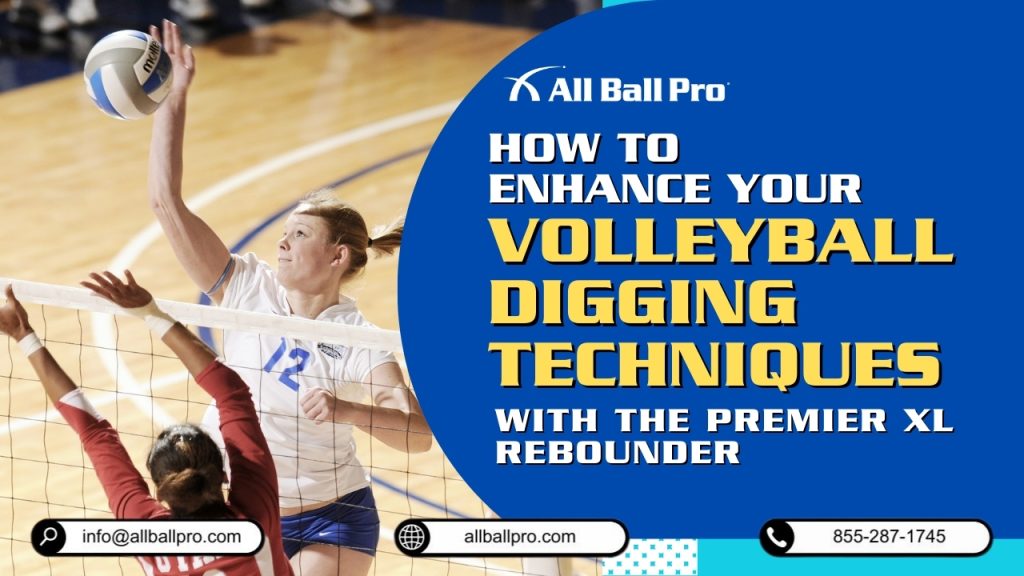
Digging is one of the most crucial defensive skills in volleyball. It requires quick reflexes, proper body positioning, and consistent training to develop the ability to react to fast and unpredictable spikes. Many players struggle with getting low enough, anticipating attacks, and maintaining control when receiving hard-driven balls. Training aids, such as The Premier XL Rebounder by All Ball Pro, provide an excellent way to sharpen digging skills by simulating real-game situations and improving reaction time.
In this article, we will discuss effective drills to enhance your volleyball digging technique, focusing on proper form, reaction training, and endurance-building exercises that can be practiced with a rebounder.
1. Mastering Low Stance and Ready Position with The Premier XL Rebounder
Before executing a successful dig, a solid ready position is essential. Your ability to react quickly depends on how well you position your body before the ball comes your way.
- Feet Shoulder-Width Apart – Stand with your feet slightly wider than your shoulders, knees bent, and weight balanced on the balls of your feet.
- Stay Low – Keep your hips lower than your shoulders and maintain an athletic stance so you can move in any direction with ease.
- Hands in Front – Position your arms slightly extended but relaxed, keeping your platform ready to react to the ball.
- Eyes on the Ball – Train yourself to track the ball from the setter’s hands to the hitter’s contact point.
- Engage Your Core – A strong core stabilizes your movements and helps maintain balance when diving or shifting laterally.
- Use the Volleyball Rebounder – The Premier XL Rebounder allows you to receive unpredictable ball trajectories, improving reaction time and reinforcing a stable ready stance.
2. Reaction Time Drills with a Volleyball Rebounder
Quick reactions are vital for digging hard-hit balls. Using a rebounder enhances your reflexes by mimicking real-game spikes and unpredictable deflections.
- Solo Rebound Drill – Stand about 8-10 feet away from the rebounder and toss the ball against it to practice quick digs.
- Rapid Fire Drill – Have a partner throw balls into the rebounder at different angles to force quick adjustments in body positioning.
- High-Speed Deflections – Adjust the rebounder’s angle to create sharper, more challenging deflections, requiring quicker reaction times.
- Lateral Movement Drill – Start in a centered position, react to each rebounded ball by shuffling sideways to dig the ball.
- Randomized Ball Paths – Hit the ball off the rebounder at varied speeds and angles to prepare for unpredictable in-game situations.
- Increase Tempo Gradually – Begin at a moderate pace and build speed as reaction time improves, mimicking real match intensity.
3. Strengthening Arm Control and Platform Stability
Having a steady arm platform ensures accurate digs and prevents excessive ball spin.
- Lock Your Elbows – Keep your arms straight with wrists pressed together to create a strong, flat platform.
- Angle Your Platform – Direct your forearms toward the target instead of swinging at the ball.
- Controlled Contact – Absorb hard-driven balls by slightly flexing your knees and shoulders instead of using excessive arm motion.
- Rebounder Target Practice – Aim to direct the ball consistently toward a designated target area using the rebounder.
- Soft Touch Drills – Practice softening ball impact by letting it rebound slightly off your forearms before redirecting it.
- One-Arm Digs – Occasionally, you may need to dig with one arm, so training single-arm reactions using the rebounder can be beneficial.
4. Increasing Endurance for Extended Rallies
Digging is exhausting, and prolonged rallies require endurance to maintain precision.
- Timed Digging Intervals – Set a timer for 30-second intervals and perform rapid digging repetitions using the rebounder.
- Dynamic Footwork Drills – Combine digging with shuffle movements to increase endurance and agility.
- Jumping Recovery Drill – After each dig, perform a quick jump or lateral step to simulate transitioning back into ready position.
- Two-Minute Nonstop Drills – Continuously dig balls for two minutes, alternating between different digging techniques.
- Progressive Fatigue Drills – Increase repetitions gradually to push endurance limits.
- Strength Training Integration – Incorporate leg and core exercises to build stamina needed for long rallies.
5. Improving Ball Anticipation and Reading Opponents
Anticipation plays a significant role in reading attacks and positioning yourself effectively.
- Watch the Setter – Observe where the setter is placing the ball to predict where the hitter will attack.
- Identify Hitter’s Tendencies – Notice patterns in the hitter’s approach to anticipate shot direction.
- Train with the Rebounder – Adjust the rebounder to unpredictable angles to simulate unexpected shots.
- Perception Drills – Have a partner call out attack directions just before you react to simulate real-time decision-making.
- Delayed Reaction Training – Start moving only after the hitter makes contact, forcing faster decision-making.
- Predict and Position – Mentally process plays before they happen, improving court awareness.
6. Practicing Emergency Saves and Pancake Digs
Diving for a ball or executing a pancake dig can be game-changing.
- Controlled Diving Practice – Use a padded surface to train proper diving techniques without fear of injury.
- Pancake Timing Drill – Simulate a close call by timing your pancake digs with the rebounder’s return.
- Roll and Recover – After a dive, quickly roll back into position to stay engaged in the play.
- Extension Training – Work on fully extending your arms without overreaching to maintain control.
- Low Ball Drills – Adjust the rebounder to send balls at lower angles, forcing you to dig close to the ground.
- Quick Reaction Saves – Simulate emergency saves by having a partner send balls unpredictably into the rebounder.
Developing solid volleyball digging skills requires consistent training, endurance, and precise technique. Using tools like All Ball Pro Rebounders allows players to refine their reaction time, improve footwork, and strengthen platform control without needing a partner. Whether focusing on endurance, ball control, or quick reflexes, incorporating a rebounder into your routine enhances real-game preparedness. By practicing these drills regularly, players can build confidence in their defensive game and handle powerful spikes more effectively. With dedication and the right training tools, athletes can elevate their digging skills and contribute significantly to their team’s success.